miércoles, 12 de febrero de 2014

Angola Oil and Gas Profile

Introduction

  • Angola has become the largest crude oil producing country in Africa, surpassing Nigeria in 2009 due to attacks on the oil infrastructure in the Niger Delta. Oil plays an important role in the Angolan economy, accounting for over 90 percent of export revenues and over 80 percent of GDP.
  • Despite crude oil production limitations imposed by OPEC, Angola is expected to increase oil production and capacity in the short-term as new offshore projects come online and foreign investment continues to flow into the sector.
  • Natural gas production in Angola is tied directly to oil production and is often vented or flared, with limited volumes consumed domestically. Plans are underway to capture and market this natural gas for domestic electricity generation and to export most of it in the form of liquefied natural gas (LNG) by 2012.

Regulation

  • The sector is regulated by the 2004 Petroleum Act. This law aims to establish the rules of access and performance of petroleum operations in the areas of available surface and submerged the national territory, internal waters, territorial sea, exclusive economic zone and continental shelf.
  • Sonangol has the exclusive rights to oil and gas exploration and production in Angola - both onshore and offshore. The process of negotiating and granting oil concessions, as well as aftermath control, is the responsibility of Sonangol Holding.

Upstream

  • Oil production in Angola is concentrated in numerous offshore blocks. The offshore blocks are divided into three bands; shallow water blocks 0-13 (band A); deepwater blocks 14-30 (band B); and ultra-deepwater blocks 31-40 (band C). Additional blocks are now being designated in the ultra-deepwater offshore lower Congo Basin (click here to view Sonangol’s concession map).
  • Despite the expense of developing the deepwater and ultra-deepwater fields, Angolan oil production has grown rapidly over the past decade and will continue to do so in the short-term. Major existing and future developments are summarized below.
  • A Statoil Platform in Angola
  • For a map of oil concessions See here

Onshore

  • Onshore exploration and production activities have mainly focused around the Cabinda province and were halted during Angola’s civil war. The Cabinda province is home to separatist movements demanding access to oil revenues and greater participation in oil policy.
  • While the government has appointed members to political positions, and security has improved, clashes still occur between the military and rebels in the area. Some existing wells that were drilled prior to the war and the neighboring Block Zero have proven to be extremely successful (see below).

Offshore

  • Photo: BP Offshore Drilling Rig
  • Block Zero: Block Zero is located offshore Cabinda province and is divided into two separate areas with 21 fields. Cabinda Gulf Oil Company (CABGOC), a Chevron subsidiary and operator of Block Zero since 1955, has a 39.2 percent share in the JV. Other partners include Total and Eni.
  • According to Chevron, Block Zero accounted for approximately 340,000 bbl/d of production in 2008. Additional production is expected from the Block as drilling and exploration activities continue.
  • In July 2009, Chevron also announced that the Mafumeira Oil and Gas Field was underway and the first field was to reach peak production of 30,000 bbl/d by 2011.
  • Block 14: In addition to Block Zero, CABGOC is the operator of neighboring deepwater Block 14 (also offshore Cabinda) with 31 percent interest and is joined by partners Eni, Sonangol, Total and Petrogal. A total of 11 discoveries have been made on the block with Kuito Oil Field being the first in 1997.
  • Production in Block 14 centers around the Benguela, Belize, Lobito, and Tomboco BBLT Oil Fields which reached its 200,000 bbl/d peak in 2008; the recently started up Tombua-Landana Oil Field which is expected to peak in late 2010 at 100,000 bbl/d; and the Kuito field which has been in decline from its 2000 peak of 80,000 bbl/d. As with Block Zero, further exploration is underway.
  • Block 15: ExxonMobil is operator of Block 15, the largest producing deepwater block in Angola along with partners BP, Eni and StatoilHydro. Block 15 is located in the Congo Basin and has estimated recoverable hydrocarbon reserves of 4.5 billion bbl, and at peak production, Block 15 is expected to exceed 800,000 bbl/d.
  • In 2003, ExxonMobil brought online Xikomba Oil Field, with estimated recoverable reserves of 100 million bbl. Production from Xikomba is currently below 20,000 bbl/d. In August 2004, the first of the Kizomba developments, four floating, production, storage and offloading (FPSO) facilities were brought online:
  • The Kizomba-A project, which includes the Chocalho and Hungo fields, was the first of the Kizomba projects started in 2004 and peaked at 250,000 bbl/d. Phase 2 of this project started up in 2007 with the Marimba North field adding a further 40,000 bbl/d.
  • The Kizomba-B project, brought online in 2005 includes the Dikanza and Kissanje fields. Kizomba-B contains an estimated one billion bbl of recoverable oil reserves peak production was an estimated 250,000 bbl/d.
  • The Kizomba-C project, consists of the Batuque, Mondo and Saxi fields. Production at the Mondo field came onstream in January of 2008 and the Saxi-Batuque Oil Field came onstream in mid- 2008 with a combined peak of 200,000 bbl/d.
  • The Kizomba-D fields are expected onstream after 2011 with a peak production capacity of 120,000 bbl/d. There is potential for added production from surrounding satellite fields expected onstream after 2010 that could produce an additional 125,000 bbl/d.
  • Block 17: Total operates Block 17 with a 40 percent share, while Sonangol is the concession holder. Other shareholders include ExxonMobil, BP, and StatoilHydro. According to BP, the block is producing around 250,000 barrels of oil equivalent per day. Field production started in December 2001 with the startup of theGirassol Oil Field and production has since been maintained by the startup of Jasimin (2003), Dalia Oil Field (2006) and Rosa Oil Field(2007)
  • Future projects on Block 17 include Pazflor Oil Field and CLOV Oil and Gas Fields, which will produce an estimated 200,000 bbl/d and 150,000 bbl/d, respectively, starting in 2011. In 2009, Total also announced a new discovery, Gardenia-1 that confirmed the companies plans to expand activities in the block.
  • Block 18: The Greater Plutonio Oil Field in Block 18 (BP operated) came online in October of 2007 at 100,000 bbl/d. The development consists of five fields: Plutonio, Galio, Paladio, Cromio and Cobalto and is currently producing just under 200,000 bbl/d.

Active Companies

  • In 1976, the Angolan government created a national oil company (NOC) called the Sociedade Nacional de Combustiveis de Angola (Sonangol).
  • In 1978, Sonangol became the sole concessionaire for oil and gas exploration and production in Angola. Sonangol works with foreign companies through joint ventures (JVs) and production sharing agreements (PSAs), while funding its share of production through oil-backed borrowing.
  • In recent years, Sonangol has become more active in both upstream and downstream operations. Major international oil companies (IOCs) operating in Angola include BP, Chevron, Total, ExxonMobil and Eni.
  • China’s Sinopec and CNOOC are among the newer international companies operating in Angola and are proving to be important players in terms of development aid, oil backed loans and trade.
  • Maersk Oil entered Angola in June 2005, when it acquired a 50% interest and operatorship of Block 16. In November 2006, it acquired a 50% interest and operatorship of Blocks 8 and 23 with Svenska Petroleum Exploration (30%) and Sonangol (20%). Maersk Oil made the Chissonga discovery on Block 16 in 2009 and drilled two further appraisal wells in 2010 and 2011.
  • Sonangol has a list of active companies here

Crude Oils

Midstream

Liquefied Natural Gas (LNG)

  • Chevron and Sonangol together with other shareholders including Total, BP and Eni are building a five-million-ton LNG plant near Soyo in northern Angola. The plant is expected to be operational by 2012. See Angola Soyo Lng Terminal

Downstream

  • Domestic oil consumption in 2009 was approximately 65,000 bbl/d. The country’s one refinery in Luanda, Fina Petroleos de Angola – a JV between Sonangol Total and private investors – has a crude oil processing capacity of 39,000 bbl/d.
  • See Luanda Refinery
  • The remaining demand is met by imports of gasoline, jet fuel, kerosene, distillate fuel oil, and other products.
  • Angola is developing plans for a new 200,000 bbl/d refinery, SonaRef, in the coastal city of Lobito. The project was initially to be built in partnership with Sinopec but the Chinese company withdrew as a result of disagreements regarding the market for products. Sonangol is now proceeding with the SonaRef project but the project completion date is now slated for 2014-2015.
  • The new refinery will be able to process heavy crudes, such as those found in the Kuito and Dalia fields.
  • In the interim, the expected demand increases will continue to be met by product imports
  • See Lobito Refinery Project

Relevant Links

Company Angola Pages

viernes, 24 de enero de 2014

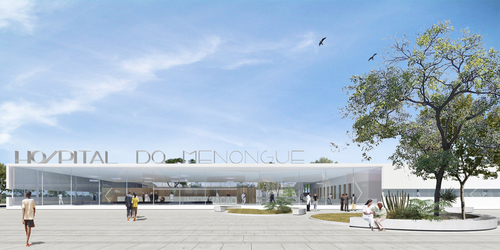
Angola - Menongue | Hospital Provincial

Menongue | Hospital Provincial


Quote:
Menongue Hospital.

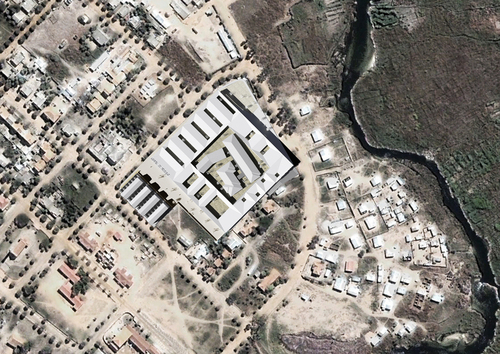
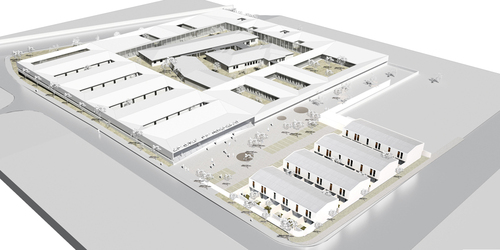
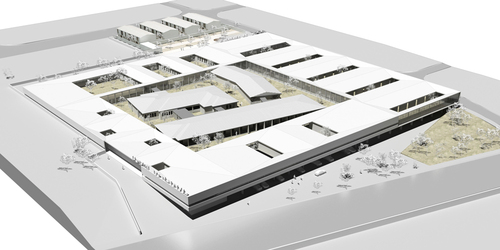
The new Menongue Hospital is the result of a complex project carried out at a colonial hospital dating form the 1950s which was converted, through major refurbishment work on the existing 4.000 m2, along with an expansion of 13.000 m2, into a leading county hospital boasting at all the services and technologies expected at a facility of theses characteristics. The strategic placement of its technical and public corridors allows for the seamless integration of new and former buildings. The expansion encompasses the previous grounds, generating a set of courtyards which ensure the proper spacing of the complex, natural light and ventilation making essential aspects of the facility.


Published by
PmMt Arquitectura

Head Designer
PmMt arquitectura

Client
Makiber

Program
County Hospital.

Built Surface
17.000 sqm

Status
Approved

viernes, 27 de diciembre de 2013

Angola’s Rig Count Is 26, With Chevron as the most active driller


Angola’s Rig Count Is 26, With Chevron as the most active driller

Chevron-HQ-Luanda
Chevron has been active on seven (7) rigs in Angola since October 2013, maintaining the rig count through November to the last week of December 2013.
The U. S. major is closely followed by TOTAL, which deployed six rigs in October and November, and increased the fleet to seven in December.
ENI and BP come a distant third, with rig count of three each, throughout the period under review. ExxonMobil was drilling with two rigs, throughout October and November and most of December 2013. Cobalt Energy, the American minnow, has the same rig count as ExxonMobil. Maersk deployed one rig throughout the three months. Sonangol did not drill at all in October and November. It has been active in December, with one rig.
Chevron is drilling with BBLT Platform drilling Rig, Maersk Deliverer, Tran Honor, Trident XIV,Hercules 267, West Setia Platform Drilling Rig and West Vendecor Platform Drilling Rig. But for the accident on Perro Negro 6, which sank the Jack-up facility, the company would have had eight rigs working for it throughout the period. TOTAL’s drilling fleet include Ocean Olympia, Pride Africa DS-1,Pride Africa DS-2, Saipem 12000, Ocean Skyros, West Gemini PP-C Unit, West Eclipse, Pride Africa DS-7.
BP deploys D. Luanda (DSL), Deepsea Stavanger and Ensco DS 6. ENI:  Ocean Poseidon, Scarabeo 7and Scarabeo 9. ExxonMobil uses GSF Celtic Sea and Transocean Rather. Maersk is on West Polarisand Sonangol is utilizing Sapphire Driller.

jueves, 28 de noviembre de 2013

Melhorias no Hospital do Sumbe - Kwanza Sul

Melhorias no Hospital do Sumbe
Victor Pedro | Sumbe
22 de Novembro, 2013

O centro de consultas externas do Hospital Provincial “17 Setembro”, na cidade do Sumbe, melhorou a assistência médica e medicamentosa, com a abertura de uma farmácia e ampliação de algumas áreas para atendimento aos pacientes.
"O estabelecimento tem tido, de forma faseada, algumas reestruturações, que permitem atender a especialidade de estomatologi", disse Augusto Lenge, responsável do centro, que acredita na melhoria da prestação de serviço à população, após a conclusão das obras em curso. Augusto Lenge recordou que a instituição atende diariamente 180 pacientes nas especialidades de Pediatria, Medicina, Oftalmologia, Urologia, Otorrinolaringologia, Cardiologia, Ortopedia e Estomatologia.
A entrada em funcionamento no mês de Agosto de um Banco Ambulatório aumentou a capacidade de atendimento do centro e melhorou as condições técnicas, materiais e humanas.
“temos apelado o bom senso da população , pois por se tratar de uma situação passageira”, disse.
No capítulo dos recursos humanos, Augusto Lenge referiu que o centro se encontra bem servido, uma vez que conta com a cobertura de nove médicos.
O centro registou, de Janeiro a Outubro, 39.122 pacientes, contra os 44 mil durante igual período do ano passado.

viernes, 15 de noviembre de 2013

Novos hospitais digitais em Angola

Novos hospitais digitais em Angola


|

01/11/2012 18:13:00

  
Novos hospitais digitais em Angola
O ministro das telecomunicações e tecnologias, José Carvalho da Rocha, anunciou hoje, em Luanda, que o país contará, a partir do mês de Dezembro, com dois hospitais digitais, no âmbito do programa do executivo no domínio da saúde, para permitir a ligação entre os diversos hospitais existentes no país.
o ministro fez este anúncio no decurso do primeiro congresso e vi jornadas ciêntinficas de ginecologia, obstetrícia e perinatologia, que decorre desde 30 de outubro e termina hoje, com o lema «saúde martena e perinatal - prioridade absoluta», explicando que esta experiência-piloto será realizada no hospital municipal do cazenga e no hospital geral de luanda.
o governante referiu que tem trabalhado com o ministério da saúde para ajudar a dar a respostas a todos aqueles que procuram os serviçosde de saúde. «é por esta razão que vamos avançar com essas duas experiências em luanda e posteriomente para as restantes províncias, para tornar os serviços mais automatizados», reforçou.
adiantou que os hospitais terão arranque no próximo ano e que vão ser benéficos para o país.
o ministro acrescentou que o seu ministério está disposto em colaborar e trabalhar na formação de quadros neste domínio e na mudança de comportamento, gestão hospitalar e na documentação.
sol/angop

viernes, 4 de octubre de 2013

Luanda: Anunciada construção de novos hospitais no Cazenga

Luanda: Anunciada construção de novos hospitais no Cazenga

Rosa Bessa- director provincial Saúde de Luanda (ANGOP)
O município do Cazenga, em Luanda, vai ganhar em 2014, mas um hospital municipal e um centro de saúde de referência, para uma maior cobertura na municipalidade.
O anúncio foi feito nesta localidade à imprensa, pela directora provincial da saúde de Luanda, Rosa Bessa, adiantando que as unidades serão erguidas nos locais onde foram desactivados os centros de saúde do Hoji ya henda e Asa Branca em consequência das inundações na época chuvosa.
Rosa Bessa disse que no local onde funcionou o centro de saúde do Hoji ya henda vai surgir um novo edifício, porque o actual tem problemas de drenagem das águas, mas que se tem feito o tratamento.
Sublinhou que, os trabalhos na avenida Ngola kiluanje estão muito avançadas, o que vai permitir que em 2014 se consiga fazer uma nova unidade com todos os serviços.
“ No Hoji ya henda vai surgir um hospital municipal, enquanto no Asa Branca, um centro de saúde de referência com todas as condições, porque negociações foram já mantidas com a administração local”, disse.
Quanto a falta de reagentes e ambulâncias no município, disse que algumas questões devem ser solucionadas através dos projectos das administrações locais.
Segundo a responsável, o sector possui politicas para a requalificação de laboratórios que vão ser implementadas com ajuda das administrações municipais, no âmbito da municipalização dos serviços de saúde.
Cazenga é um dos sete municípios da província de Luanda, possuiu uma população estimada em dois milhões de habitantes, distribuídos nas comunas do Tala-hadi, Cazenga e Hoji ya henda. (portalangop.com)

lunes, 9 de septiembre de 2013

The Angola LNG Project

The proposed Angola LNG Project will involve collecting natural gas from offshore oil and gas production facilities and delivering it through pipelines to onshore LNG process facilities. The LNG process facilities will be located on the south bank of the Congo River, on the northern shoreline of Kwanda Island in the Soyo area of the Zaire Province. The onshore facilities will be located
inside the boundaries of the existing Kwanda Base.

For Angola LNG, the base will also be expanded into the Baía de Diogo Cão by filling about 100 hectares of the bay with sand to create new land in a process referred to as land reclamation. As shown on the map below, this reclaimed area is small relative to the area of the bay.
Approximately 900 million cubic feet per day of associated and non-associated gas from Blocks 0, 1, 2,
14, 15, 17 and 18 will be collected and transported from offshore production facilities to the proposed LNG plant.

A portion of the gas (currently anticipated to be 75 million cubic feet per day) will be made available for use locally, promoting the development of other industries in the Soyo region that could not otherwise develop without a gas supply. The remaining gas will be used to produce

LNG as well as liquefied petroleum gas (LPG) and condensates. The plant will initially have one train of five million tonnes per year of LNG production capacity. LNG will be delivered to regasification facilities in the U.S. The gas will go into the U.S. market and possibly other Atlantic Basin markets.


Aerial view of Kwanda Island showing proposed Angola LNG site.


In addition to the LNG process facilities, a marine terminal will be built with two dedicated marine berths, one for LNG only and one for LPG and condensate.

Offshore Blocks where gas will be gathered to supply LNG Plant.

These berths will be located on the north side of the plant where the LNG tankers (expected to be in the range of 250 to 300 m in length) and other vessels will load product. To allow the vessels to approach Kwanda Island, the existing shipping channel between the Ponta de Padrão and Kwanda Island will be widened and deepened to 14 m deep and 250 m wide. A new dedicated turning area will also be dredged in the Pululu Channel.

The LNG Project will also include permanent onshore supporting facilities, such as offices, residential housing, and associated recreational and service infrastructure, as well as temporary support facilities during the construction phase, such as storage areas where construction materials can be stored and a marine dock. Permanent accommodation for construction workers will be built southwest of Soyo.

Site Selection

The selection of the site for the project was the most important single decision in influencing the nature of the environmental, socioeconomic and health impacts of the Project.

Extensive studies and consultation with local and national stakeholders in coordination with the Government of Angola supported the selection of Kwanda Island as the site of the Project.

Early site selection work concluded that the Project should be located in Soyo. A key factor in this decision was the vision of the Government of Angola for Soyo to become one of the centers of industrial growth in Angola.

Within the Soyo area, many potential sites were assessed, taking into consideration a number of factors
including environmental, socioeconomic, health and safety, operability, security, cost, schedule, potential to promote economic growth and the views of residents of Soyo.

In April 2004, meetings were held with the communities that use land on or directly adjacent to the short list of three potential sites near Soyo. Meetings were also held with fishermen, the municipal administrator, government representatives, traditional leaders, business organizations and church groups. There was not unanimous agreement on any one site. However, it was clear that stakeholders were in favor of the Angola LNG Project as an opportunity for employment, and they wanted to
promote future industrial development in Soyo and also to minimize environmental impacts.
Kwanda Island was selected for the location of the Angola LNG facility.

The site was selected because it had the lowest potential to impact the natural environment and Soyo
communities. The site selection process considered a range of criteria, including water quality,
habitat and species, fisheries, coastal geomorphology, recreation, community health and safety, the
effect of adjacent secondary industries, settlements and buildings, land use, cultural sites, recreation,
and the effect on communities that would be directly next to the site.

Overview of LNG Plant and Turning Basins.

Model of LNG Plant and Tankers.